The Skill You're Quietly Losing to AI
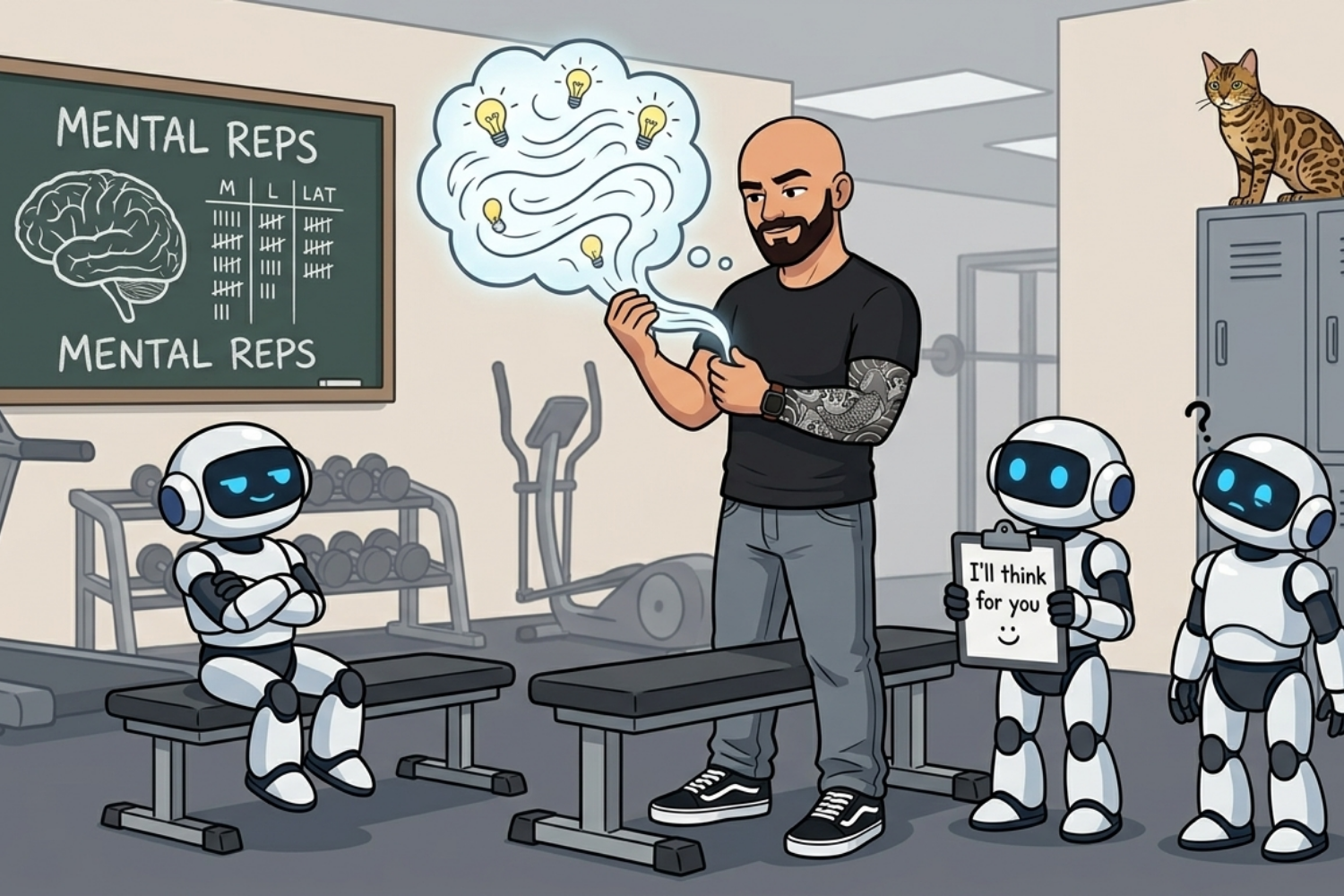
The Quiet Trade-Off Nobody's Talking About
There's a concept in aviation called "automation bias."
It's what happens when pilots trust the autopilot so much they stop monitoring the instruments themselves. Their manual flying skills erode. Their situational awareness dulls. And when something goes wrong - when the system fails or hits a scenario it wasn't built for - the human in the seat isn't ready.
We're doing the same thing with AI.
Not dramatically. Not all at once. Just a slow, quiet erosion of the thinking muscles we used to exercise every day.
The Capability You're Handing Over
Here's what I'm watching happen in real organizations right now.
A manager asks AI to draft a performance review. It comes back polished. Structured. They tweak a few words and send it. Six months later, they're asked to have a hard conversation with that same employee - and they realize they never actually formed a point of view about that person's performance. They outsourced the thinking, not just the writing.
A sales leader uses AI to prep for every client meeting. The briefs are excellent. But after a year of reading AI summaries instead of doing their own research, they've lost the instinct for what questions to dig into. The AI told them what to think. They forgot how to notice.
This is skill atrophy. And it's not hypothetical.
It's what happens when you stop doing the cognitive reps.
What The Research Is Starting To Show
A 2023 study from MIT found that AI writing tools improved output quality for low-skilled workers significantly - but slightly reduced the output quality of high-skilled workers. The tools pulled everyone toward the middle.
Microsoft's own research on Copilot usage found that heavy AI users reported feeling less confident in their ability to complete tasks independently over time. Not immediately. Gradually.
The pattern is consistent: when a tool does the thinking for you, you get the output. You don't get the growth.
What's Fine To Let Go (And What Isn't)
Not all cognitive work is worth protecting. Some of it was just friction.
Formatting documents, summarizing long threads, generating first drafts of routine communication - handing that off is fine. That work wasn't building anything meaningful in your brain. It was just taking time.
What's worth protecting is different. It falls into three categories.
Judgment under ambiguity. The ability to make a call when the data is incomplete and the stakes are real. This only develops through practice. If AI is always resolving your ambiguity for you, you're not practicing.
Relational reading. Knowing what's really going on with a person - what they're not saying, what they need, what's driving their behavior. AI can help you prepare for a conversation. It cannot teach you to read the room.
Original synthesis. The ability to take disparate inputs and form a genuinely new point of view. Not summarize. Not recombine. Actually think something new. This is where competitive advantage lives, and it atrophies fast when you stop doing it.
How To Keep The Muscle
This isn't an argument against AI. SPARK6 uses these tools every day, and they've made us sharper in the areas where we still do our own thinking.
The move is intentional separation.
For high-stakes deliverables, write your own first draft before you touch AI. Let the tool improve your thinking, not replace it. The discipline of forming a position before you ask for help is what keeps the muscle active.
For decisions, write out your own reasoning before you prompt. Use AI to pressure-test your thinking, not to generate it. There's a meaningful difference between "here's what I think, what am I missing" and "what should I think about this."
Once a week, do something hard without the tool. A piece of writing. A client analysis. A performance assessment. Not because the output will be better - it probably won't be, at least not at first. Because the point is the rep, not the result.
The leaders who come out ahead in an AI-saturated world won't be the ones who use AI the most.
They'll be the ones who know exactly what they're still doing themselves.
Want help applying this to your product or strategy? We’re ready when you are → Let's get started.