They're all using a different AI than you are
Not All AI Is Created Equal
Most people using AI right now are using a watered-down version of it.
That's not an insult. It's just how these tools are sold. The free plan exists to get you in the door. The model behind it is real, but it's not the best one. The best one costs money - and even then, how much you pay determines how much of it you actually get.
Nobody puts that on the homepage.
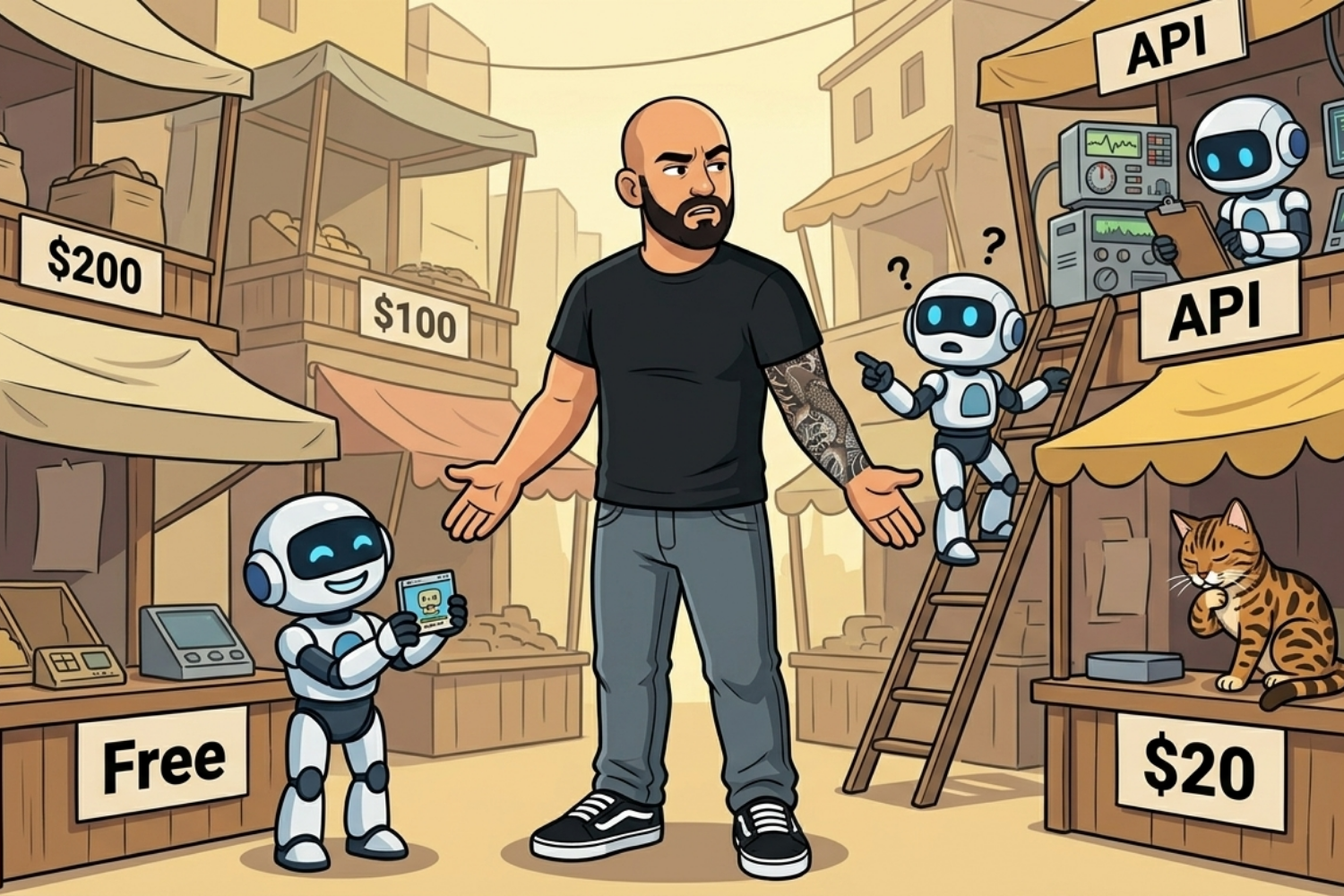
The Ladder Nobody Showed You
Every major AI lab - Anthropic, Google, OpenAI - sells access in tiers. Here's what that actually looks like in plain language.
Free plan: You get a lighter model. Useful for basic stuff. Not what the people talking about AI breakthroughs are using. No access to the advanced tools.
$20/month: You get the real models. But use them heavily for a few days and you'll start hitting walls. The pro models - Claude Opus, Gemini Pro, GPT-4o - are rationed. Push them hard and the system quietly downgrades you to something lighter until your limit resets.
$100/month: You get 5x the usage of the $20 plan. That sounds like a lot until you realize the best models can burn through it faster than you'd expect.
$200/month: Now you're at 20x. The jump from $20 to $100 is incremental. The jump from $100 to $200 is where the headroom actually opens up.
The math is weird. The value doesn't scale the way the price does. And the limits aren't always posted clearly - you usually find them by running into them.
The Quiet Subsidy Nobody Told You About
Here's something that explains a lot of the frustration people run into.
Almost every subscription plan these companies offer is subsidized. That means they're charging you less than it actually costs to run the AI on your behalf. They're betting that most people won't use it heavily enough for it to matter. For casual users, that bet pays off. For heavy users, the economics fall apart fast.
And when the math stops working, the rules change.
On April 4th of this year, Anthropic cut off a loophole that a large portion of the AI power-user community had been quietly depending on. A popular open-source tool called OpenClaw - which lets people run automated AI agents for things like email, browsing, and complex multi-step tasks - had figured out how to run those agents on a flat Claude subscription instead of paying per use through the API.
It worked. Really well. Too well.
Anthropic's own estimates suggested that heavy OpenClaw users on flat subscriptions were consuming five times more than what the pricing was built to absorb. When Anthropic closed the loophole, some of those users saw their costs jump by as much as 50 times overnight.
That's not a rounding error. That's a subsidy getting yanked.
The move also came right after Anthropic launched its own competing agent tool. The timing wasn't lost on anyone. But the underlying point stands regardless: these companies are not running a charity. When flat-rate pricing stops making sense for them, they fix it. Usually fast. Usually without much warning.
What's Actually Happening Behind the Curtain
I've been on the $100 Claude plan and burned through my access to the best model in just a few prompts on a heavy thinking day. Then a week later, it opens back up like nothing happened.
There's no dashboard showing you where you stand. No warning before the wall. You just notice the responses feel a little slower, a little thinner, and you realize you've been quietly switched to something lighter.
What I've learned to do is use the lighter models for the grunt work - the drafting, the sorting, the back and forth. Then bring in the best model for the hard stuff. A sanity check. A final pass. A problem that actually needs sharp thinking on it.
It's not how I'd design it. It's just the reality of how these plans work right now.
The Other Option Nobody Mentions
There's a completely different way to access these models called the API.
Forget the acronym. Here's what it means practically: instead of a monthly subscription, you buy credits and pay only for what you use. Every prompt you send and every response you get costs a small amount, measured in tiny units of text. You get billed for exactly what you consume - nothing more, nothing less.
The upside is that it's honest. No hidden rationing. No surprise walls. No rules changing on you mid-month.
The downside is it can get expensive fast if you're running something constantly without thinking it through. And it usually requires a bit of technical setup to get going.
If you're just having conversations and getting help with everyday work, a subscription is probably fine. But if you're doing anything more systematic - automating tasks, building workflows, running the same kind of process over and over - the subscription was never really designed for you.
So Which One Should You Be On
Ask yourself these four questions:
Are you mostly having conversations and getting help with everyday tasks? The $20 plan is a reasonable starting point. Just know the limits are real.
Are you using it heavily every day for serious work? The gap between $20 and $100 is worth it. Whether $200 makes sense depends on how often you're hitting the ceiling.
Are you running anything automated or repetitive? Get off the subscription. The API will cost less and make more sense.
Are you still on the free plan? You're not really using AI yet. You're using a demo of it.
The free plan is a taste. The subscription is a tool. The API is infrastructure. They are not the same thing, and the one you're on shapes what you think AI can do.
The Uncomfortable Truth
These companies are not done figuring this out.
The pricing will keep shifting. The loopholes will keep closing. The plans that feel generous today will get tighter as more people actually start using these tools the way they were meant to be used.
That's not a reason to avoid AI. It's a reason to understand what you're actually buying.
The people getting the most out of this right now aren't necessarily the ones paying the most.
They're the ones who figured out which version they actually need - and stopped assuming the default was good enough.
Want help applying this to your product or strategy? We’re ready when you are → Let's get started.